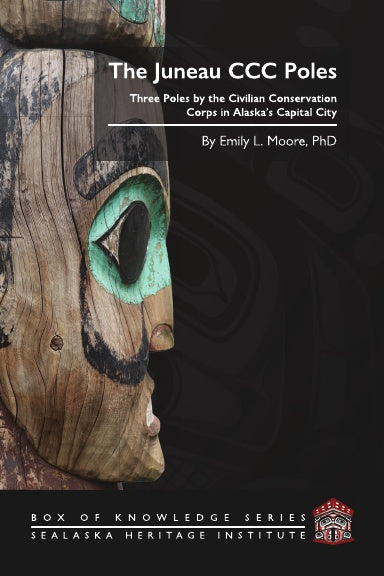
The Juneau CCC Poles
The Juneau CCC Poles
(Print on Demand)
The Juneau CCC Poles: Three Poles by the Civilian Conservation Corps in Alaska’s Capital City dives into the complicated relationship between the Forest Service and the Native carvers it employed. At the end of the Great Depression, the Forest Service hired Tlingit and Haida men to create three totem poles. Ironically, the project coincided with the Tlingit and Haida Indians of Alaska v. the United States lawsuit, which sought to reclaim millions of acres of Native land the Forest Service had set aside as the Tongass National Forest. Due to intense national interest in Native American art as “the most American” of the country’s art traditions, the US government was quick to commission these totem poles as a show of patriotism.
The disconnect between these Native artists and the government entity employing them was reflected in the three poles themselves — one contains symbols with no relevance to local Tlingit people, the next was misinterpreted for years and the third was never meant to stand in Juneau. However, Moore writes, poles were – and still are – attractions with cultural significance, and the effort CCC carvers put into honoring cultural protocols while negotiating these government commissions is apparent. With a simple and graceful prose, Moore analyzes the ongoing relationship between Natives, non-Natives and three of the most well-known totem poles in Juneau.
Couldn't load pickup availability
Shipping: Dispatches from Alaska within 1–2 business days. Excludes orders placed on holidays. Returns: Eligible items may be returned within 30 days of purchase, unused and in original packaging, with proof of purchase. Exclusions apply; customer pays return shipping. Read our refund policy.Artwork: Buying artwork? Review the artist attribution, materials and details of the individual piece. Read our authenticity guide.
Share