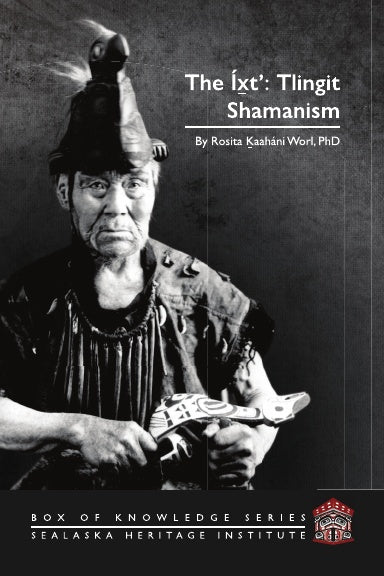
The Íx̱t': Tlingit Shamanism
The Íx̱t': Tlingit Shamanism
(Print on Demand)
In a thoughtful and thorough 30 pages, Sealaska Heritage Institute President Rosita Ḵaaháni Worl writes that the íx̱t’ once served as a conduit between tangible reality and the spirit world by communicating with supernatural entities. Shamans oversaw their community’s physical safety by curing illnesses and providing strategic intelligence during battles. They located stolen items and returned clan members who had been transformed by the Kóoshda Ḵáa (Land Otter Men) to their human form. The íxt’ even predicted future events: Sometime between 1841 and 1866, a German geographer recorded his account of a séance that concluded with a shaman’s prophecy
of the arrival of Western settlers and the diseases they’d bring with them. Besides those illnesses, Russians and Americans who settled among the Tlingit in the 1800s also brought with them a mindset that viewed shamanism as witchcraft. They began to persecute shamans, hunting and torturing them to suppress the act.
“In the minds of the Tlingit, it was ironic that witches who were viewed as practitioners of evil were protected by the American officials while shamans who were responsible for the general welfare of the Tlingit were persecuted,” Dr. Worl points out.
According to Dr. Worl, shamanism isn’t entirely extinct today since elements of the practice still exist. The beliefs that all beings in the natural realm are tied to the spiritual one, and that their relationships transcend physical reality, serve as the core themes of shamanism.
“These beliefs persist among traditional Tlingit today,” she writes.
Print on Demand
Couldn't load pickup availability
Shipping: Dispatches from Alaska within 1–2 business days. Excludes orders placed on holidays. Returns: Eligible items may be returned within 30 days of purchase, unused and in original packaging, with proof of purchase. Exclusions apply; customer pays return shipping. Read our refund policy.Artwork: Buying artwork? Review the artist attribution, materials and details of the individual piece. Read our authenticity guide.
Share